Yes, cats can eat small amounts of plain watermelon flesh. Remove seeds and rind, keep portions tiny, and treat it as an occasional snack.¹²

Watermelon flesh is generally non-toxic for cats, but seeds and rind can cause choking or gastrointestinal blockage.² Cats should primarily eat a complete and balanced diet, with treats kept limited.³⁴⁵

What to do if your cat ate watermelon?

  • Remove the watermelon and prevent access to seeds and rind.

  • If your cat ate seeds or rind pieces, contact your veterinarian for advice because these can cause gastrointestinal blockage.²

  • If your cat only ate a small amount of seedless flesh, offer water and monitor for vomiting, diarrhea, or reduced appetite.

  • Seek urgent veterinary care if your cat repeatedly vomits, seems painful, cannot keep water down, stops eating, or appears bloated, since these can be signs of a gastrointestinal problem.²

  • Keep treats under 10% of daily calories and prioritize complete and balanced cat food.⁴⁵

Danger Level: Use Caution 2/5
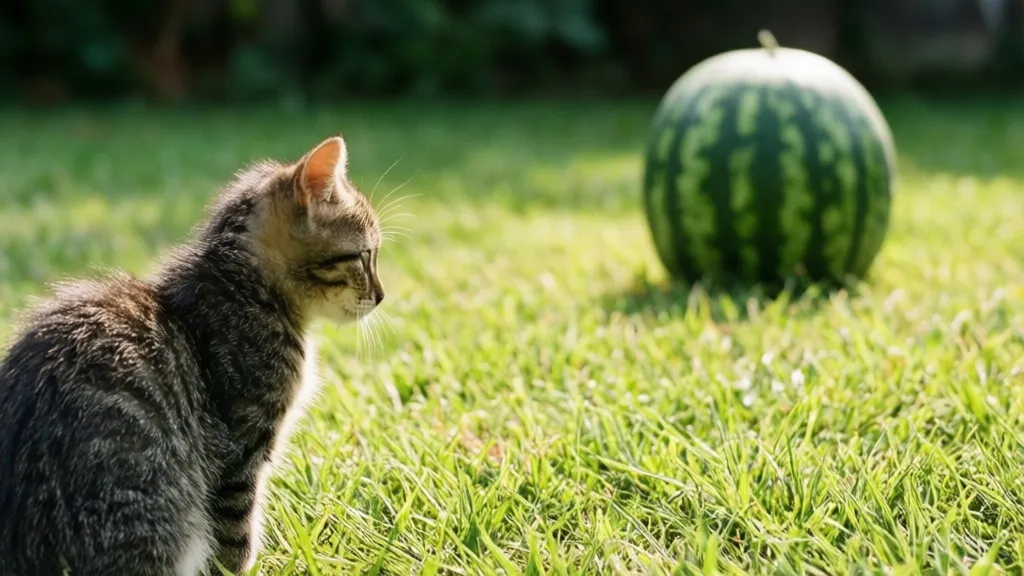
Cat looking at watermelon

Can cats eat watermelon? | Is watermelon safe for cats?

Can cats eat watermelon? Is watermelon safe for cats?

Yes. Plain watermelon flesh is generally considered non-toxic for cats and can be offered in small amounts as an occasional treat.¹ The main risks are the seeds and the rind. Veterinary guidance warns that pets may swallow seeds or eat rind pieces, and both can cause gastrointestinal blockage.² Watermelon is also a treat, not a nutritional need. Cats should get their nutrition from a complete and balanced cat diet, and treats should be limited so they do not unbalance the diet or add unnecessary calories.³⁴⁵


When watermelon is usually okay

Offer only plain watermelon flesh, cut into small, bite-sized pieces.¹ Choose seedless watermelon or remove all seeds, and keep your cat away from the rind.²


When to avoid watermelon

Avoid watermelon if it is mixed into fruit salads, smoothies, or desserts with added sugar, sweeteners, or other ingredients that are not meant for cats.³ If your cat has a medical condition that requires strict diet control, ask your veterinarian before offering any fruit treats.³


How much is too much?

Even safe foods can cause stomach upset if a cat eats too much at once. Start with a tiny taste.¹ Treats should stay under 10% of daily calories to help keep the main diet nutritionally balanced.⁴⁵

Table of contents

  1. Is watermelon safe for cats?
  2. What to do if your cat ate watermelon
  3. Symptoms to watch for (timeline)
  4. How much is too much?
  5. FAQ
  6. References

Is watermelon safe for cats?

Watermelon flesh is generally considered safe for cats in small amounts and is described as a non-toxic fruit for most cats when fed in moderation.¹

The biggest safety concern is not the flesh, but the parts cats should not eat. Veterinary guidance cautions that pets often swallow seeds or eat the rind, and both can block the gastrointestinal tract.²

Watermelon should be treated as an occasional snack, not a nutritional upgrade. Cats have specific nutritional needs and should be fed a complete and balanced diet formulated for cats.³

To keep treats from interfering with nutrition, veterinary nutrition references recommend limiting treats to under 10% of total daily calories.⁴⁵

What to do if your cat ate watermelon

Symptoms to watch for (timeline)

How much is too much?

For most healthy cats, start with a tiny piece of seedless watermelon flesh. If there is no vomiting or diarrhea, you can offer a few small bites occasionally.¹

Prepare it safely: remove all seeds and keep rind out of reach to reduce the risk of gastrointestinal blockage.²

Use a treat budget. Veterinary nutrition guidance recommends keeping treats under 10% of daily calories to avoid unbalancing the diet.⁴⁵

If your cat has a condition that requires diet control, such as obesity or a veterinary-prescribed diet, ask your veterinarian before offering fruit treats.³

FAQ

References

  1. PetMD. (2022, August 23). Can cats eat watermelon? PetMD. Retrieved February 7, 2026, from — https://www.petmd.com/cat/nutrition/can-cats-eat-watermelon
  2. VCA Animal Hospitals. (n.d.). Summer fun and follies. VCA Animal Hospitals. Retrieved February 7, 2026, from — https://vcahospitals.com/know-your-pet/summer-fun-and-follies
  3. MSD Veterinary Manual. (n.d.). Proper nutrition for cats. MSD Veterinary Manual. Retrieved February 7, 2026, from — https://www.msdvetmanual.com/cat-owners/selecting-and-providing-a-home-for-a-cat/proper-nutrition-for-cats
  4. MSD Veterinary Manual. (n.d.). Feeding practices in small animals. MSD Veterinary Manual. Retrieved February 7, 2026, from — https://www.msdvetmanual.com/management-and-nutrition/nutrition-small-animals/feeding-practices-in-small-animals
  5. World Small Animal Veterinary Association. (2024, June). Feeding treats to your cat (v2). WSAVA Global Nutrition Committee. Retrieved February 7, 2026, from — https://wsava.org/wp-content/uploads/2024/06/Feeding-treats-to-your-cat-v2.pdf

Related articles

Illustration of a cat with exclamation points in the background

DISCLAIMER

The information provided on Can Pets Eat It is for educational and informational purposes only and is not a substitute for professional veterinary advice, diagnosis, or treatment. Always seek the guidance of your veterinarian or another qualified animal health professional before offering any food to your pet. Never disregard or delay seeking professional advice because of something you have read on this website. We make no guarantees about the accuracy or completeness of the content, and we are not responsible for any actions taken based on this information. Please be reasonable, use common sense, and seek professional guidance whenever you have concerns about your pet.