No. Cats should not consume alcohol, and even small exposures can be dangerous.

Alcohol can rapidly cause serious poisoning in cats, including dangerous drops in blood sugar and body temperature, breathing problems, coma, and death.

What to do if your cat ate alcohol?

  • Remove the alcohol source and keep your cat away from any spills, glasses, bottles, or alcohol-containing products.

  • If this involved a product (hand sanitizer, mouthwash, dessert), save the packaging so you can share ingredients and alcohol percentage with a veterinarian.

  • Call your veterinarian immediately for guidance, especially if you suspect more than a tiny lick.

  • Seek urgent care right away if your cat is stumbling, very sleepy, vomiting repeatedly, trembling, breathing slowly, or has seizures.

  • Do not try to induce vomiting unless a veterinary professional specifically instructs you to do so.

Danger Level: High Danger / Toxic 4/5
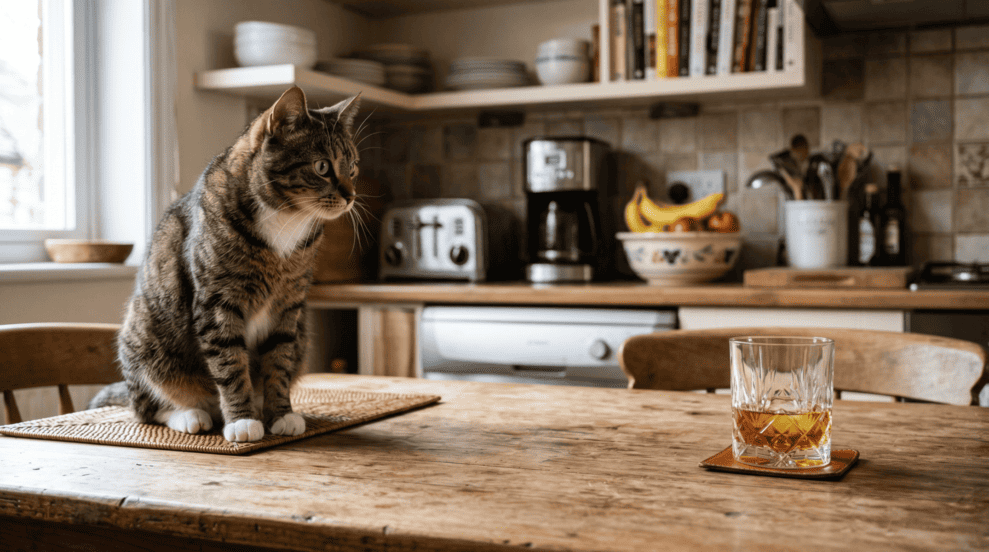
Cat looking at alcohol

Can cats eat alcohol? | Is alcohol safe for cats?

Can cats eat alcohol? Is alcohol toxic to cats?

No. Cats should not consume alcohol. Alcohol (ethanol) can be life-threatening to pets, and cats are considered especially sensitive.²³ Alcohol is absorbed quickly, so signs can start fast, often within about 20 to 90 minutes after a toxic exposure.² Serious cases can progress beyond “acting drunk” to dangerous problems like low body temperature, low blood sugar, breathing problems, coma, and death.¹² If your cat licked alcohol, drank from a glass, or got into something that contains alcohol (like hand sanitizer, mouthwash, or raw yeast dough), contact your veterinarian right away.²


Why alcohol is dangerous for cats

Alcohol affects the nervous system and can depress breathing and heart function. Veterinary toxicology references describe signs such as vomiting, diarrhea, poor coordination, disorientation, lethargy, tremors, and breathing difficulty, with severe cases progressing to coma, hypothermia, seizures, slow heart rate, and respiratory depression.¹


Common sources of alcohol exposure

Alcohol poisoning in pets is not only from beer, wine, or liquor. Other sources can include liquor-filled candies or desserts, hand sanitizer, mouthwash, some liquid medications, rotten or fermenting fruit, and uncooked rising-yeast dough that can generate alcohol in the stomach.²


This is an emergency, not a wait-and-see situation

Because alcohol is rapidly absorbed and signs can appear quickly, there is a short window for safe decontamination in a veterinary setting.¹ Home “remedies” can be risky, especially if your cat is sleepy, uncoordinated, or vomiting. If you are worried about any exposure, call a veterinarian immediately.²

Table of contents

  1. Is alcohol safe for cats?
  2. What to do if your cat ate alcohol
  3. Symptoms to watch for (timeline)
  4. How much is too much?
  5. FAQ
  6. References

Is alcohol safe for cats?

Alcohol (ethanol) is toxic to cats and should never be offered as food or a “taste.” Veterinary references note that alcohol can cause rapid neurologic and metabolic problems, and severe cases can be fatal.¹²

Clinical signs can start quickly because alcohol is rapidly absorbed. One veterinary source notes signs can occur within about 20 to 90 minutes after exposure to a toxic dose.² Another veterinary toxicology reference describes a typical onset within 30 to 60 minutes.¹

Signs may include vomiting, diarrhea, poor coordination, disorientation, lethargy, tremors, and breathing difficulty. Severe poisoning can progress to hypothermia, low blood sugar, seizures, coma, and death.¹²

Cats are often exposed accidentally, for example by lapping up unattended alcoholic drinks or getting into alcohol-containing products. The ASPCA has warned that enough ethanol can lead to coma and that intoxicated pets are at risk of inhaling vomit, which can cause serious pneumonia.⁴

What to do if your cat ate alcohol

Symptoms to watch for (timeline)

How much is too much?

There is no safe amount of alcohol for cats. Guidance from a veterinary pharmacy poison control resource notes that there is no established threshold for toxicity in cats and recommends reporting any exposure immediately.³

Cats are small, so even a small volume can represent a meaningful dose. One veterinary source specifically notes that cats are especially sensitive to alcohol poisoning.²

Because risk depends on concentration (for example liquor versus beer) and the cat’s size and health, the safest approach is simple: avoid all alcohol exposure and treat any ingestion as urgent.¹²³

FAQ

References

  1. MSD Veterinary Manual. (2025). Toxicoses from alcohols in animals. Retrieved January 31, 2026, from — https://www.msdvetmanual.com/toxicology/toxicoses-from-household-hazards/toxicoses-from-alcohols-in-animals
  2. VCA Animal Hospitals. (n.d.). Alcohol poisoning. Retrieved January 31, 2026, from — https://vcahospitals.com/know-your-pet/alcohol-poisoning
  3. American College of Veterinary Pharmacists. (2023, April 25). Ethanol. Pet Poison Control. Retrieved January 31, 2026, from — https://vetmeds.org/pet-poison-control-list/ethanol/
  4. American Society for the Prevention of Cruelty to Animals. (2017, March 15). Shamrocks & alcohol: Pet safety tips for St. Patrick’s Day. Retrieved January 31, 2026, from — https://www.aspca.org/news/shamrocks-alcohol-pet-safety-tips-st-patricks-day

Related articles

Illustration of a cat with exclamation points in the background

DISCLAIMER

The information provided on Can Pets Eat It is for educational and informational purposes only and is not a substitute for professional veterinary advice, diagnosis, or treatment. Always seek the guidance of your veterinarian or another qualified animal health professional before offering any food to your pet. Never disregard or delay seeking professional advice because of something you have read on this website. We make no guarantees about the accuracy or completeness of the content, and we are not responsible for any actions taken based on this information. Please be reasonable, use common sense, and seek professional guidance whenever you have concerns about your pet.