No, chocolate is not safe for cats.¹ Darker chocolates and cocoa powder are the most dangerous because they contain higher levels of theobromine and caffeine.¹ ²

Chocolate contains methylxanthines (theobromine and caffeine) that are toxic to cats. These compounds are absorbed after ingestion and can affect the gastrointestinal tract, brain, and heart.¹ ² Depending on the dose and the type of chocolate, signs can range from vomiting and diarrhea to dangerous abnormal heart rhythms, tremors, seizures, coma, or death.¹ ²

What to do if your cat ate chocolate?

  • Remove any remaining chocolate and packaging, and prevent further access (close trash cans and pick up wrappers).¹

  • Figure out what was eaten (cocoa powder, baking chocolate, dark, milk, or white chocolate), how much, and when.¹ ²

  • Call your veterinarian right away. If you cannot reach them quickly, contact an animal poison control service for guidance.¹ ⁴

  • Do not induce vomiting or give activated charcoal at home unless a veterinarian specifically instructs you to do so.²

  • Go to an emergency veterinarian immediately if your cat shows tremors, seizures, collapse, severe agitation, or trouble breathing.¹ ²

Danger Level: Use Caution 2/5
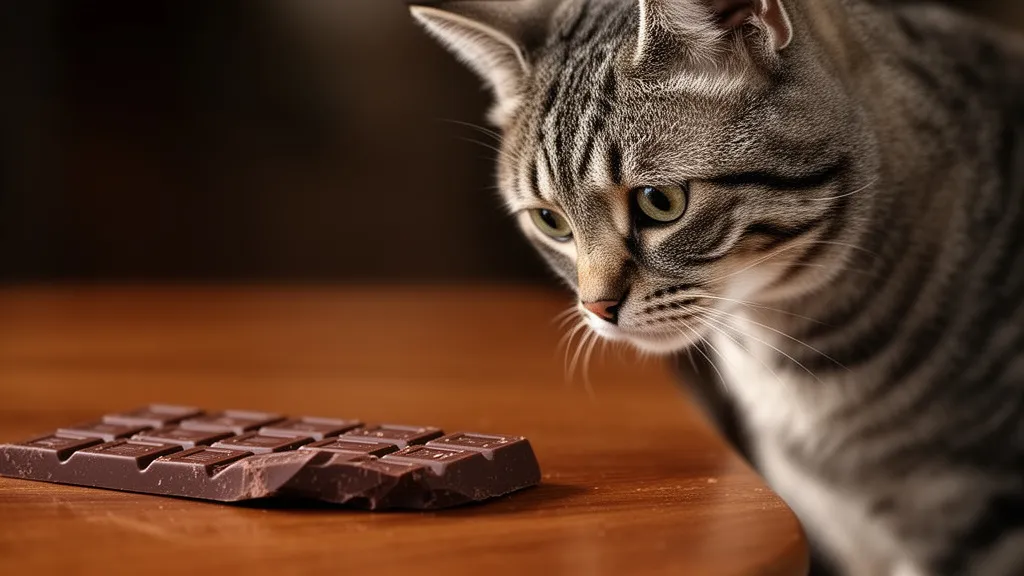
Cat looking at chocolate

Can cats eat chocolate? | Is chocolate safe for cats?

Can cats eat chocolate? Is chocolate safe for cats?

No, cats should not eat chocolate. Chocolate contains methylxanthines (especially theobromine and caffeine) that can affect a cat’s stomach, heart, and nervous system.¹ ² Even small tastes can cause stomach upset, and larger exposures can lead to dangerous symptoms like abnormal heart rhythms, tremors, or seizures.¹ ² If your cat ate any chocolate, treat it as potentially serious. Try to identify the type and amount (dark, baking chocolate, cocoa powder, milk chocolate, or white chocolate) and contact your veterinarian or an animal poison control service right away.¹ ⁴


Quick answer

Chocolate is not safe for cats.¹ ² Dark chocolate, baking chocolate, and cocoa powder are the most risky because they contain more theobromine and caffeine per bite.¹ ²


Why chocolate is toxic to cats

Chocolate’s main toxins are the methylxanthines caffeine and theobromine. In cats, these chemicals are absorbed after ingestion and can stimulate the brain and heart, causing gastrointestinal upset, restlessness, fast heart rate, abnormal rhythms, tremors, and seizures in more severe cases.¹ ²


What to do if your cat ate chocolate

Remove the chocolate and any wrappers, estimate the type and amount eaten, and call your veterinarian or poison control immediately for case-specific guidance.¹ ⁴ Do not try home remedies unless a veterinary professional tells you exactly what to do.


Symptoms to watch for

Signs can include vomiting, diarrhea, restlessness, increased thirst, panting, a racing heart, abnormal heart rhythms, tremors, and seizures.¹ ³ If you notice tremors, seizures, collapse, trouble breathing, or extreme agitation, seek emergency care immediately.¹ ²


How much is too much

There is no reliably “safe” amount of chocolate for cats. Toxicity depends on your cat’s size, the chocolate type, and the total dose of methylxanthines, which varies widely by product.² Dark chocolate, baking chocolate, and cocoa powder are far more concentrated than milk chocolate, while white chocolate contains negligible methylxanthines but can still cause stomach upset due to fat and sugar.¹ ²

Table of contents

  1. Is chocolate safe for cats?
  2. What to do if your cat ate chocolate
  3. Symptoms to watch for (timeline)
  4. How much is too much?
  5. FAQ
  6. References

Is chocolate safe for cats?

Chocolate is not a safe food for cats. It contains caffeine and theobromine (methylxanthines) that can be toxic to cats and dogs.¹ ²

After a cat eats chocolate, these substances are absorbed from the gut and can affect the muscles, brain, and heart.¹ ² This is why chocolate poisoning can cause both digestive signs (vomiting, diarrhea) and neurological or cardiovascular signs (restlessness, tremors, abnormal heart rhythms).¹ ² ³

Risk depends heavily on the chocolate type. Dark chocolate, unsweetened baking chocolate, and cocoa powder generally contain much higher methylxanthine concentrations than milk chocolate, and white chocolate is a negligible source of methylxanthines.¹ ²

What to do if your cat ate chocolate

Symptoms to watch for (timeline)

How much is too much?

There is no guaranteed safe amount of chocolate for cats. The danger depends on your cat’s body weight, the type of chocolate, and the total dose of methylxanthines (theobromine plus caffeine).¹ ²

Chocolate products vary widely in methylxanthine concentration. Cocoa powder and unsweetened baking chocolate are among the most concentrated, dark chocolate is also high, and milk chocolate is lower but still unsafe.¹ ²

White chocolate contains negligible methylxanthines, so it is less likely to cause classic methylxanthine poisoning. However, it is still not a good treat for cats because the fat and sugar can cause gastrointestinal upset, and high-fat foods can contribute to other complications in susceptible animals.¹ ²

Because the exact product and dose matter, the safest approach is to call a veterinarian any time your cat eats chocolate, especially if it was dark chocolate, baking chocolate, cocoa powder, or any unknown product.¹ ² ⁴

FAQ

References

  1. 1. VCA Animal Hospitals. (n.d.). Delicious but dangerous: Chocolatey facts every cat owner should know. VCA Animal Hospitals. Retrieved January 31, 2026, from https://vcahospitals.com/resources/lifestyle-cat/hazards-safety/delicious-but-dangerous-chocolatey-facts-every-cat-owner-should-know — https://vcahospitals.com/resources/lifestyle-cat/hazards-safety/delicious-but-dangerous-chocolatey-facts-every-cat-owner-should-know
  2. 2. Hayes, C. (2025). Chocolate toxicosis in animals. MSD Veterinary Manual. (Reviewed/Revised September 2024; Modified June 2025). https://www.msdvetmanual.com/toxicology/food-hazards/chocolate-toxicosis-in-animals — https://www.msdvetmanual.com/toxicology/food-hazards/chocolate-toxicosis-in-animals
  3. 3. Pet Poison Helpline. (n.d.). Chocolate. Pet Poison Helpline. Retrieved January 31, 2026, from https://www.petpoisonhelpline.com/poison/chocolate/ — https://www.petpoisonhelpline.com/poison/chocolate/
  4. 4. American Society for the Prevention of Cruelty to Animals. (n.d.). ASPCA Poison Control. ASPCA. Retrieved January 31, 2026, from https://www.aspca.org/pet-care/aspca-poison-control — https://www.aspca.org/pet-care/aspca-poison-control
  5. 5. American Animal Hospital Association. (2024, October 16). Halloween safety: Chocolate toxicity in pets. AAHA. https://www.aaha.org/resources/halloween-safety-chocolate-toxicity-in-pets/ — https://www.aaha.org/resources/halloween-safety-chocolate-toxicity-in-pets/

Related articles

Illustration of a cat with exclamation points in the background

DISCLAIMER

The information provided on Can Pets Eat It is for educational and informational purposes only and is not a substitute for professional veterinary advice, diagnosis, or treatment. Always seek the guidance of your veterinarian or another qualified animal health professional before offering any food to your pet. Never disregard or delay seeking professional advice because of something you have read on this website. We make no guarantees about the accuracy or completeness of the content, and we are not responsible for any actions taken based on this information. Please be reasonable, use common sense, and seek professional guidance whenever you have concerns about your pet.