A tiny lick of xylitol-free peanut butter is usually low risk for many cats, but it is not a healthy or necessary treat. Choose carefully and keep portions very small.¹²³

Peanut butter is high in fat and calories, and some brands contain xylitol, which is extremely dangerous to dogs. Cats should get nutrition from a complete and balanced cat diet, and treats should stay under 10% of daily calories.²³⁴⁵

What to do if your cat ate peanut butter?

  • Check the ingredient label right away. If the peanut butter contains xylitol and you have a dog that may have accessed it, treat this as an emergency and contact a veterinarian immediately.²⁷

  • If your cat had only a small lick of xylitol-free peanut butter, offer water and monitor for vomiting, diarrhea, or reduced appetite.

  • If your cat ate a large amount, stop treats for the day and contact your veterinarian if stomach upset occurs or your cat seems unwell.

  • Do not use peanut butter as a frequent treat. Keep treats under 10% of daily calories to avoid diet imbalance and unwanted weight gain.³⁴

  • If your cat is on a veterinary-prescribed diet or has a health condition, ask your veterinary team before offering peanut butter or other human foods.⁵

Danger Level: Use Caution 2/5
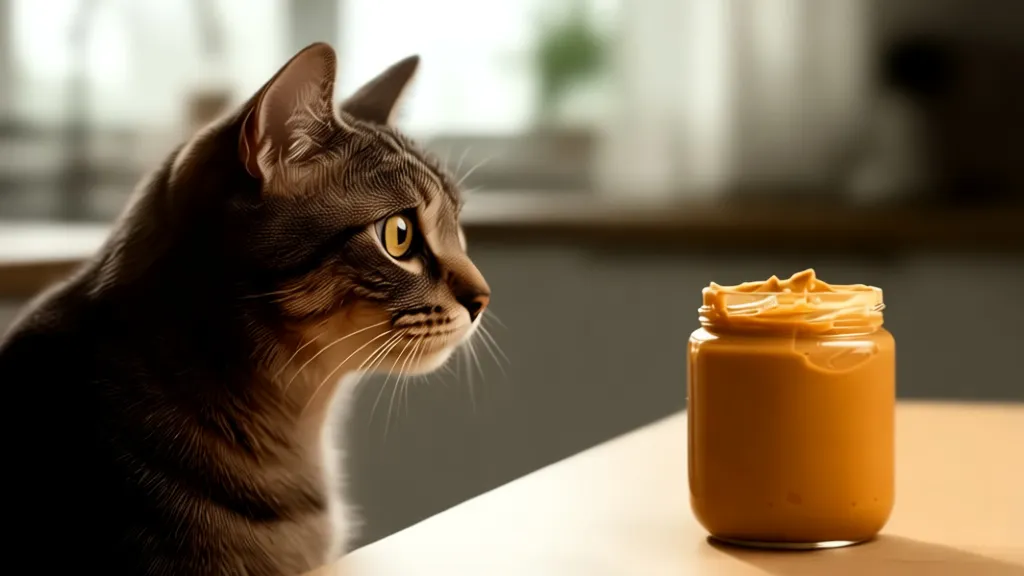
Cat looking at peanut butter

Can cats eat peanut butter? | Is peanut butter safe for cats?

Can cats eat peanut butter? Is peanut butter safe for cats?

Sometimes. A tiny taste of peanut butter is usually not considered toxic to cats, but it is not a recommended treat for regular feeding. Peanut butter is high in fat and calorie-dense, so portions should be very small.¹² The biggest safety issue is what is inside the peanut butter. Some products contain xylitol, a sweetener that can be life-threatening to dogs.²⁷ If you have dogs in the home, keep any xylitol-containing peanut butter away from all pets and contact a veterinarian immediately if a dog may have ingested it.²⁷ For cats, treats should stay limited so they do not unbalance the diet. Veterinary nutrition guidance commonly recommends keeping treats under 10% of daily calories, and your cat’s main food should be a complete and balanced cat diet.³⁴⁵


When peanut butter is usually okay

If you choose to offer any, use a tiny amount of plain peanut butter as a rare treat. Choose a product with no xylitol and keep portions small because peanut butter is high in fat.¹²


What to avoid

Avoid peanut butter that contains xylitol. Xylitol toxicosis is a major emergency risk for dogs.²⁶⁷ Also avoid peanut butter with chocolate, and avoid highly sweetened or heavily salted products.⁸


Treat rules that keep cats safe

Most treats are not complete and balanced. To avoid nutrient imbalances and weight gain, keep treats under 10% of daily calories and prioritize a nutritionally balanced cat diet.³⁴⁵

Table of contents

  1. Is peanut butter safe for cats?
  2. What to do if your cat ate peanut-butter
  3. Symptoms to watch for (timeline)
  4. How much is too much?
  5. FAQ
  6. References

Is peanut butter safe for cats?

Peanut butter is not typically listed as a toxic food for cats, but it is not an ideal snack. Veterinary guidance notes peanut butter is high in fat, so quantities should be kept small.²

Cats are obligate carnivores and should be fed commercially formulated, nutritionally balanced food. Human snacks like peanut butter do not help meet a cat’s nutritional needs and can add extra calories.⁵

Ingredient risk matters. Some peanut butter products contain xylitol, a sugar substitute that can be lethal to dogs. The ASPCA advises checking labels carefully because some peanut butter products contain xylitol.²

For cats, there is an important nuance. A veterinary toxicology reference notes that dogs are the only domestic species in which xylitol toxicosis has been reported and that cats are not considered at risk for the same hypoglycemia or liver injury seen in dogs.⁶ Still, because products can contain multiple ingredients and households may include dogs, it is safest to avoid xylitol-containing peanut butter entirely.²⁶⁷

Finally, treat size matters. Most treats are not complete and balanced, so veterinary nutrition references recommend keeping treats under 10% of daily calories to prevent nutrient imbalance.³⁴

What to do if your cat ate peanut-butter

Symptoms to watch for (timeline)

How much is too much?

If you choose to offer peanut butter, keep it extremely small, such as a tiny smear, and only occasionally. Peanut butter is high in fat, so large portions are not recommended.¹²

Use a treat budget instead of guessing portions. Veterinary nutrition references recommend keeping treats under 10% of your cat’s daily calories.³⁴

Cats with obesity, diabetes, pancreatitis history, chronic digestive issues, or those on a veterinary-prescribed diet should generally avoid high-calorie human treats unless your veterinarian approves.⁵

FAQ

References

  1. VCA Animal Hospitals. (n.d.). Treats to skip and treats to share with your pet! VCA Animal Hospitals. Retrieved February 7, 2026, from — https://vcahospitals.com/resources/preventive-dog/nutrition/treats-to-skip-and-treats-to-share-with-your-pet
  2. American Society for the Prevention of Cruelty to Animals. (2021, January 28). Sharing is caring: Foods you can safely share with your pet. ASPCA. Retrieved February 7, 2026, from — https://www.aspca.org/news/sharing-caring-foods-you-can-safely-share-your-pet
  3. MSD Veterinary Manual. (n.d.). Feeding practices in small animals. MSD Veterinary Manual. Retrieved February 7, 2026, from — https://www.msdvetmanual.com/management-and-nutrition/nutrition-small-animals/feeding-practices-in-small-animals
  4. World Small Animal Veterinary Association. (2024, June). Feeding treats to your cat (v2). WSAVA Global Nutrition Committee. Retrieved February 7, 2026, from — https://wsava.org/wp-content/uploads/2024/06/Feeding-treats-to-your-cat-v2.pdf
  5. MSD Veterinary Manual. (n.d.). Proper nutrition for cats. MSD Veterinary Manual. Retrieved February 7, 2026, from — https://www.msdvetmanual.com/cat-owners/selecting-and-providing-a-home-for-a-cat/proper-nutrition-for-cats
  6. MSD Veterinary Manual. (n.d.). Xylitol toxicosis in dogs. MSD Veterinary Manual. Retrieved February 7, 2026, from — https://www.msdvetmanual.com/toxicology/food-hazards/xylitol-toxicosis-in-dogs
  7. VCA Animal Hospitals. (n.d.). Xylitol toxicity in dogs. VCA Animal Hospitals. Retrieved February 7, 2026, from — https://vcahospitals.com/know-your-pet/xylitol-toxicity-in-dogs
  8. American Society for the Prevention of Cruelty to Animals. (n.d.). People foods to avoid feeding your pets. ASPCA Animal Poison Control Center. Retrieved February 7, 2026, from — https://www.aspca.org/pet-care/aspca-poison-control/people-foods-avoid-feeding-your-pets

Related articles

Illustration of a cat with exclamation points in the background

DISCLAIMER

The information provided on Can Pets Eat It is for educational and informational purposes only and is not a substitute for professional veterinary advice, diagnosis, or treatment. Always seek the guidance of your veterinarian or another qualified animal health professional before offering any food to your pet. Never disregard or delay seeking professional advice because of something you have read on this website. We make no guarantees about the accuracy or completeness of the content, and we are not responsible for any actions taken based on this information. Please be reasonable, use common sense, and seek professional guidance whenever you have concerns about your pet.