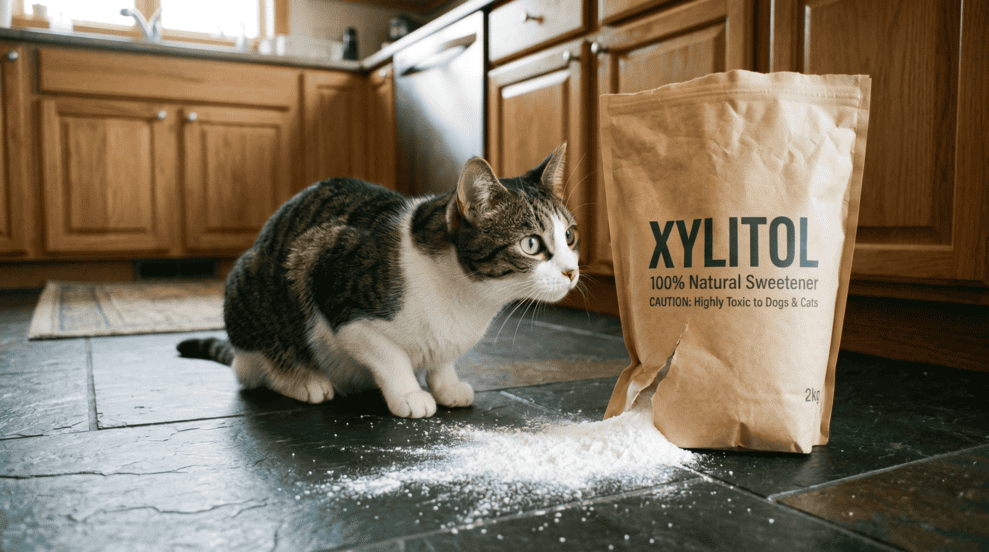
Do not feed xylitol to cats. Cats are not believed to experience the classic dog-style xylitol poisoning, but xylitol products should still be kept away from cats and all pets.³⁴
Xylitol is extremely dangerous to dogs, and veterinary sources highlight that dogs are the domestic species with reported xylitol toxicosis.³⁴ Because many xylitol products are human foods or hygiene items with other risks, it is safest to avoid xylitol exposure in cats too.¹²
What to do if your cat ate xylitol?
Remove the product and prevent further access. Keep the package so you can share ingredients and the xylitol amount (if listed) with your veterinarian.²
If a dog in your home may have accessed the product, treat this as an emergency and contact a veterinarian or poison control immediately.¹²
If your cat ingested a small amount, call your veterinarian for advice and monitor for vomiting, diarrhea, appetite changes, or unusual tiredness.
If the product was gum, candy, or anything that could cause choking or GI blockage, seek veterinary guidance right away.
If you are unsure, contact a 24/7 poison resource (for example ASPCA Animal Poison Control) for guidance.⁵
Danger Level: Moderate Hazard 3/5