Plain, fully cooked eggs are generally safe for most cats as an occasional treat.¹ Avoid raw or undercooked eggs, and contact your veterinarian if your cat ate egg with onions or garlic or develops vomiting or diarrhea.²,⁵,⁸,⁹

Cooked egg is listed among foods that are safe and often enjoyed by cats, as long as it is offered without seasonings.¹ Raw eggs are higher risk because they can contain foodborne bacteria, and raw egg whites contain avidin which can reduce biotin absorption when fed repeatedly.²,⁴,⁵ Keep egg as an occasional treat so it stays within the recommended treat allowance, generally less than 10% of daily calories.⁶,⁷

What to do if your cat ate eggs?

  • Check what your cat ate: cooked vs. raw, roughly how much, and whether it was seasoned or mixed with other foods.

  • If it was plain cooked egg and your cat is acting normal, offer fresh water and monitor for vomiting, diarrhea, reduced appetite, or lethargy over the next 24 hours.⁸

  • If it was raw or undercooked egg, call your veterinarian for guidance, especially for kittens, seniors, or cats with chronic illness.²,⁴

  • If the egg contained onions, garlic, chives, or seasoning blends, contact a veterinarian right away because Allium ingredients can be dangerous to cats.⁹

  • Seek urgent veterinary care if you see repeated vomiting, bloody diarrhea, marked weakness, trouble breathing, collapse, or pale gums.⁸,⁹

Danger Level: Use Caution 2/5
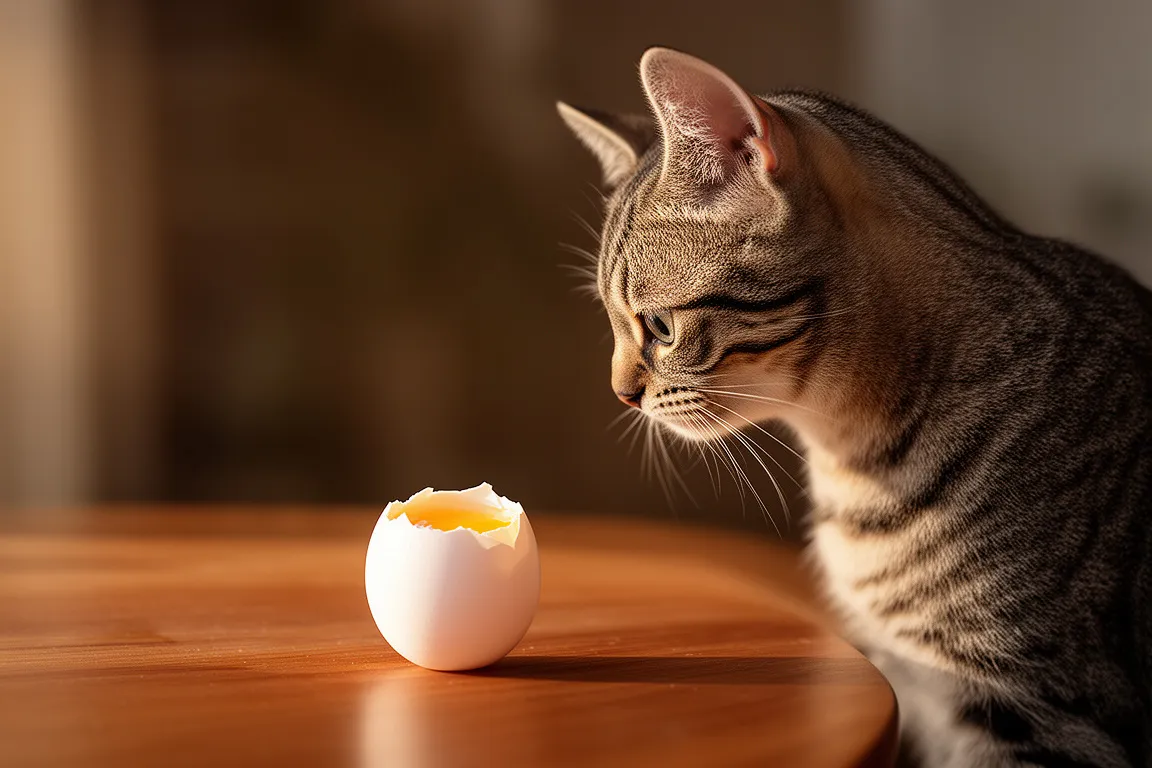
Cat looking at eggs

Can cats eat eggs? | Are eggs safe for cats?

Can cats eat eggs? Are eggs safe for cats?

Yes, most cats can have a small amount of plain, fully cooked egg (boiled, scrambled, or poached) as an occasional treat.¹ Egg should not replace a complete and balanced cat food.⁶ Avoid raw or undercooked eggs. Raw eggs can contain bacteria such as Salmonella and E. coli, and raw egg whites contain avidin which can interfere with biotin absorption when fed repeatedly.²,⁵ If your cat stole a bite of cooked egg, monitor for vomiting or diarrhea. If they ate raw egg, egg prepared with onions or garlic, or you notice repeated vomiting, diarrhea, lethargy, or poor appetite, contact your veterinarian for advice.⁸,⁹


Are eggs safe for cats?

Plain, fully cooked eggs are generally safe for healthy adult cats in small amounts.¹ Raw or runny eggs are not recommended because of bacterial risk and potential biotin interference.²,⁵


What to do if your cat ate eggs

Check whether the egg was cooked or raw and whether it contained risky ingredients like onions or garlic.¹,⁹ Then monitor for stomach upset and call your veterinarian if symptoms develop or your cat seems unwell.⁸


Symptoms to watch for

The most common issues after eating the wrong kind of egg are gastrointestinal signs such as vomiting, diarrhea, reduced appetite, and lethargy.⁸ Seek veterinary advice promptly if signs are persistent or severe.⁸


How much egg is too much?

Treats should generally stay under 10% of your cat’s daily calories.⁶,⁷ Because egg adds extra calories and can unbalance the main diet, keep portions tiny and infrequent, and ask your veterinary team for a personalized amount.⁶

Table of contents

  1. Are eggs safe for cats?
  2. What to do if your cat ate eggs
  3. Symptoms to watch for (timeline)
  4. How much is too much?
  5. FAQ
  6. References

Are eggs safe for cats?

In general, cats can eat eggs, but preparation matters. Plain, fully cooked egg is considered a safe “people food” option for many cats and is sometimes used as a high-value treat.¹

The safest way to offer egg is fully cooked and unseasoned. Offer it plain, and avoid egg dishes that contain onions, garlic, or chives, because Allium ingredients can cause serious toxicity in cats.¹,⁹

Raw or runny eggs are not a good idea for cats. Raw eggs may contain bacteria such as Salmonella and E. coli, which can be harmful to pets and people.²,⁴

There is also a nutrition-specific concern with raw egg whites. The MSD Veterinary Manual notes that raw egg whites contain avidin, which binds biotin and can prevent absorption, potentially leading to deficiency signs such as dermatitis and lethargy if exposure is significant or ongoing.⁵

Even when cooked, egg should stay in the treat category. Veterinary nutrition guidance recommends keeping treats under about 10% of a cat’s daily calorie intake so the main diet remains complete and balanced.⁶,⁷

Some cats can be sensitive or allergic to certain foods. Because virtually any ingredient can trigger a food allergy in an individual pet, stop feeding egg and speak with your veterinarian if you notice itching, skin redness, or recurrent ear problems after egg exposure.¹⁰

What to do if your cat ate eggs

Symptoms to watch for (timeline)

How much is too much?

There is no single perfect amount of egg for every cat because calorie needs vary with age, body size, activity level, and health status. A practical rule is to keep egg as a very small, occasional treat, not a daily add-on.⁶

Veterinary nutrition guidance recommends that treats and extras make up less than about 10% of a cat’s total daily calorie intake.⁶,⁷ This helps prevent unintended weight gain and keeps the main diet nutritionally complete and balanced.⁶

If you want to share egg, start with a tiny portion (a bite-sized piece) and see how your cat tolerates it. If your cat has any medical condition or is on a therapeutic diet, ask your veterinarian before offering egg again.⁶

Do not feed raw egg, and do not offer egg dishes that contain onions, garlic, chives, or seasoning blends.¹,²,⁹

FAQ

References

  1. VCA Animal Hospitals. (n.d.). Using food and treats for training cats. VCA Animal Hospitals. — https://vcahospitals.com/know-your-pet/using-food-and-treats-for-training-cats
  2. American Society for the Prevention of Cruelty to Animals. (n.d.). People foods to avoid feeding your pets. ASPCA Animal Poison Control. — https://www.aspca.org/pet-care/aspca-poison-control/people-foods-avoid-feeding-your-pets
  3. American Veterinary Medical Association. (n.d.). Raw or undercooked animal-source protein cat and dog diets (raw diets for dogs and cats) [Policy]. — https://www.avma.org/resources-tools/avma-policies/raw-or-undercooked-animal-source-protein-cat-and-dog-diets
  4. VCA Animal Hospitals. (n.d.). Avoiding raw food in cats. VCA Animal Hospitals. — https://vcahospitals.com/know-your-pet/avoiding-raw-food-in-cats
  5. MSD Veterinary Manual. (n.d.). Nutritional requirements of small animals. MSD Veterinary Manual. — https://www.msdvetmanual.com/management-and-nutrition/nutrition-small-animals/nutritional-requirements-of-small-animals
  6. World Small Animal Veterinary Association. (2024). Feeding treats to your cat (v2) [PDF]. WSAVA. — https://wsava.org/wp-content/uploads/2024/06/Feeding-treats-to-your-cat-v2.pdf
  7. American Animal Hospital Association. (n.d.). Healthy and low-calorie snacks for pets [PDF]. American Animal Hospital Association. — https://www.aaha.org/wp-content/uploads/globalassets/05-pet-health-resources/nutritionalresources/petparent/aaha-healthy-local-snacks-for-pets.pdf
  8. VCA Animal Hospitals. (n.d.). Gastroenteritis in cats. VCA Animal Hospitals. — https://vcahospitals.com/know-your-pet/gastroenteritis-in-cats
  9. MSD Veterinary Manual. (n.d.). Garlic and onion (Allium spp) toxicosis in animals. MSD Veterinary Manual. — https://www.msdvetmanual.com/toxicology/food-hazards/garlic-and-onion-allium-spp-toxicosis-in-animals
  10. VCA Animal Hospitals. (n.d.). True or False? Grain is the most common food allergen in pets. Answer: False. VCA Animal Hospitals. — https://vcahospitals.com/resources/conditions-cat/allergies/true-or-false-grain-is-the-most-common-food-allergen-in-pets

Related articles

Illustration of a cat with exclamation points in the background

DISCLAIMER

The information provided on Can Pets Eat It is for educational and informational purposes only and is not a substitute for professional veterinary advice, diagnosis, or treatment. Always seek the guidance of your veterinarian or another qualified animal health professional before offering any food to your pet. Never disregard or delay seeking professional advice because of something you have read on this website. We make no guarantees about the accuracy or completeness of the content, and we are not responsible for any actions taken based on this information. Please be reasonable, use common sense, and seek professional guidance whenever you have concerns about your pet.