Sometimes. A tiny piece of plain cheese is usually okay for many cats, but cheese is not recommended as a regular treat.

Many cats are lactose-intolerant and dairy can cause diarrhea or vomiting. Cheese is also an extra-calorie treat, and seasoned or spoiled cheeses can be unsafe.

What to do if your cat ate cheese?

  • Check what your cat ate: plain cheese is usually low risk in tiny amounts, but seasoned cheese (garlic, onion, chives) or moldy cheese is more concerning.¹⁵

  • Remove access to the cheese and keep the packaging so you can check ingredients and share them with your veterinarian if needed.

  • Offer fresh water and monitor for vomiting, diarrhea, gas, belly discomfort, reduced appetite, or unusual tiredness.¹²

  • Call your veterinarian if your cat ate a large amount, has repeated vomiting or diarrhea, seems painful, or will not eat or drink.¹²

  • If the cheese was moldy or spoiled and your cat develops tremors, wobbliness, agitation, or seizures, seek emergency veterinary care.⁵

Danger Level: Use Caution 2/5
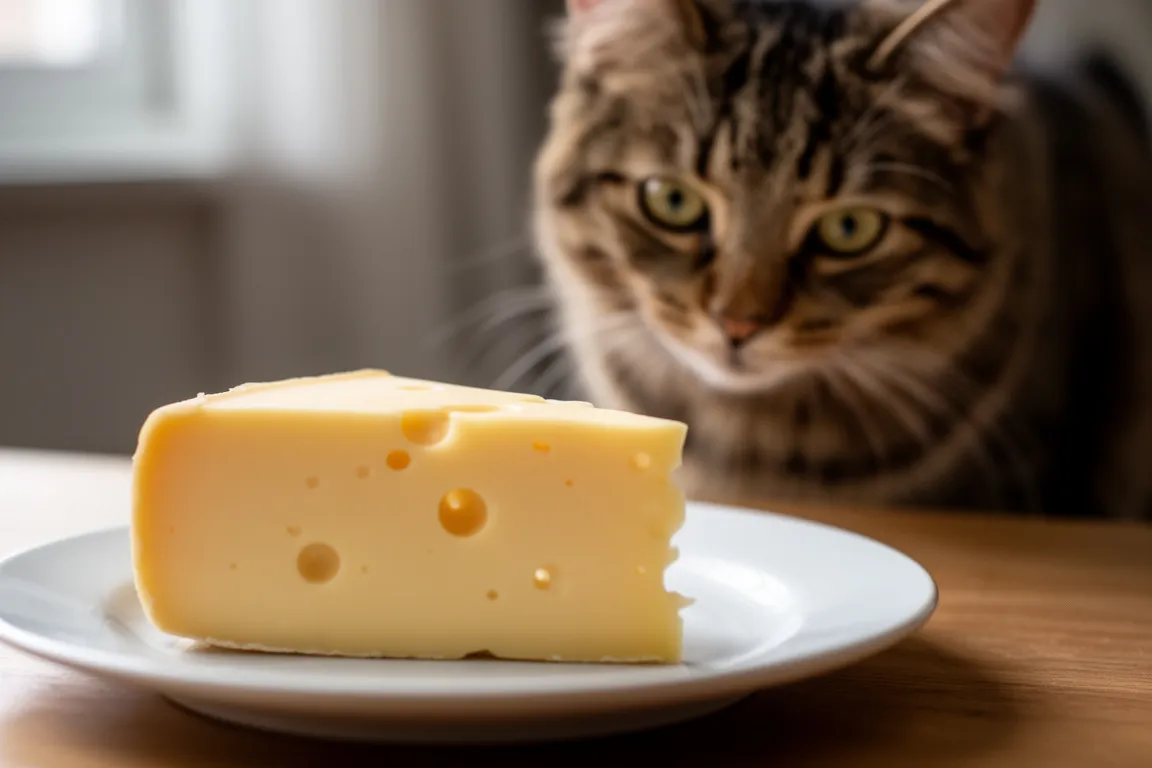
Cat looking at cheese

Can cats eat cheese? | Is cheese safe for cats?

Can cats eat cheese? Is cheese safe for cats?

Sometimes, but it is not an ideal treat. Many cats do not digest lactose well, and milk or other dairy-based foods can cause stomach upset like diarrhea, gas, or vomiting.¹² If your cat tolerates dairy, a tiny piece of plain cheese once in a while is usually low risk. However, cheese is an extra-calorie treat, so it should be offered only in moderation and counted as part of your cat’s treat “budget.”³⁴ Cheese becomes risky when it contains unsafe add-ins (like garlic, onion, or chives) or when it is spoiled or moldy. Moldy foods (including moldy cheese) can contain tremorgenic mycotoxins that may cause vomiting, tremors, wobbliness, and seizures in pets.¹⁵


Why cheese can upset a cat’s stomach

Many pets do not have significant amounts of lactase (the enzyme that breaks down lactose), so dairy can cause diarrhea or other digestive upset.¹ Veterinary references describe lactose intolerance signs in cats as diarrhea, vomiting, bloating, and abdominal discomfort after ingesting milk.²


Cheese is not toxic, but it is still a treat

Even if your cat tolerates dairy, cheese is mostly extra calories and does not improve feline nutrition. Treat guidance recommends keeping treats under 10% of a cat’s daily calories so the main diet stays complete and balanced.³⁴


Avoid seasoned or spoiled cheese

Do not share cheese that contains garlic, onion, or chives, since these Allium ingredients can be harmful to cats.¹ Avoid any spoiled or moldy cheese. Moldy foods and compost can contain tremorgenic mycotoxins that can cause serious neurologic signs.⁵

Table of contents

  1. Is cheese safe for cats?
  2. What to do if your cat ate cheese
  3. Symptoms to watch for (timeline)
  4. How much is too much?
  5. FAQ
  6. References

Is cheese safe for cats?

Cheese is not considered a classic “toxic food” for cats, but it can still cause problems. Many cats do not digest lactose well, and dairy products can trigger diarrhea or other digestive upset.¹²

Lactose intolerance happens when the body cannot break down lactose, the sugar in milk. Veterinary references describe signs such as diarrhea, vomiting, bloating, and abdominal discomfort after ingesting milk.¹²

Even when a cat tolerates dairy, cheese should not become a habit. Cats should get their nutrition from a complete and balanced diet formulated for cats.⁴

Finally, safety depends on the type of cheese. Avoid cheese with garlic, onion, or chives, and do not offer spoiled or moldy cheese. Moldy foods can carry tremorgenic mycotoxins that may cause neurologic signs.⁵

What to do if your cat ate cheese

Symptoms to watch for (timeline)

How much is too much?

There is no “healthy” cheese dose for cats, but a tiny piece is the safest approach if you choose to offer it at all. Start small to see if your cat develops diarrhea or vomiting, since many cats do not tolerate dairy well.¹²

Instead of focusing on a specific number of cubes, use a treat budget. WSAVA guidance recommends treats make up less than 10% of a cat’s daily calorie intake, which helps keep the main diet nutritionally balanced.³

Cats with sensitive stomachs or those on a veterinary-prescribed diet should generally avoid cheese unless your veterinarian specifically approves it.

FAQ

References

  1. American Society for the Prevention of Cruelty to Animals. (n.d.). People foods to avoid feeding your pets. ASPCA Animal Poison Control Center. Retrieved February 7, 2026, from — https://www.aspca.org/pet-care/aspca-poison-control/people-foods-avoid-feeding-your-pets
  2. VCA Animal Hospitals. (n.d.). Adverse reactions to food in cats. VCA Animal Hospitals. Retrieved February 7, 2026, from — https://vcahospitals.com/know-your-pet/adverse-reactions-to-food-in-cats
  3. World Small Animal Veterinary Association. (2024, June). Feeding treats to your cat (v2). WSAVA. Retrieved February 7, 2026, from — https://wsava.org/wp-content/uploads/2024/06/Feeding-treats-to-your-cat-v2.pdf
  4. MSD Veterinary Manual. (n.d.). Proper nutrition for cats. MSD Veterinary Manual. Retrieved February 7, 2026, from — https://www.msdvetmanual.com/cat-owners/selecting-and-providing-a-home-for-a-cat/proper-nutrition-for-cats
  5. Pet Poison Helpline. (n.d.). Moldy food (mycotoxins). Pet Poison Helpline. Retrieved February 7, 2026, from — https://www.petpoisonhelpline.com/poison/mycotoxin/

Related articles

Illustration of a cat with exclamation points in the background

DISCLAIMER

The information provided on Can Pets Eat It is for educational and informational purposes only and is not a substitute for professional veterinary advice, diagnosis, or treatment. Always seek the guidance of your veterinarian or another qualified animal health professional before offering any food to your pet. Never disregard or delay seeking professional advice because of something you have read on this website. We make no guarantees about the accuracy or completeness of the content, and we are not responsible for any actions taken based on this information. Please be reasonable, use common sense, and seek professional guidance whenever you have concerns about your pet.