Yes, bananas are generally safe for cats when given in moderation. They are non-toxic, so a small slice is unlikely to harm your pet.

Cats are obligate carnivores, meaning their physiology is designed to derive nutrition from animal protein rather than plants or carbohydrates. Unlike humans or dogs, cats lack the taste receptors for sweetness and the enzymes necessary to efficiently digest high-sugar fruits. Eating large amounts of bananas can spike a cat's blood sugar and strain their digestive system, leading to obesity or diabetes over time.

What to do if your cat ate bananas?

  • If your cat ate a small piece of fruit: Monitor them for any signs of an upset stomach, but they will likely be fine.

  • If your cat ate the peel: This is a more serious concern. Watch closely for signs of blockage (straining, vomiting) and contact your veterinarian immediately if these occur.

  • If your cat ate a large amount: Withhold other food for a few hours to let their stomach settle and provide plenty of fresh water. Call your vet if vomiting persists.

Danger Level: Use Caution 2/5

Cat looking at a banana

Can cats eat bananas? | Are bananas safe for cats?

Can cats eat bananas? Are bananas safe for cats?

Yes, most cats can safely eat a tiny amount of plain, ripe banana. Banana is listed as non-toxic to cats by the ASPCA, so it is not considered a poisoning risk when it is just the fruit and your cat only has a little.(ASPCA Animal Poison Control Center, n.d.-a; VCA Animal Hospitals, n.d.-a)
That said, bananas are not a necessary part of a cat’s diet. Cats are obligate carnivores and need specific nutrients that are supplied by animal tissues, so their main calories should come from a complete and balanced cat food, not from fruit. (MSD Veterinary Manual, 2024; WSAVA Global Nutrition Committee, 2024)
The main concerns with bananas are portion size and preparation. Fruit tends to be higher in sugar than vegetables, and too many treats can unbalance the diet or contribute to weight gain. Also, thick peels and large pieces can be a choking hazard or cause gastrointestinal blockage if swallowed. (VCA Animal Hospitals, n.d.-a; VCA Animal Hospitals, n.d.-b; WSAVA Global Nutrition Committee, 2024)


Are bananas safe for cats?

Plain banana flesh is generally safe in small amounts because banana is considered non-toxic to cats. Treat it as an occasional snack, not a regular food, and always serve it peeled and in small, manageable pieces. (ASPCA Animal Poison Control Center, n.d.-a; VCA Animal Hospitals, n.d.-a; WSAVA Global Nutrition Committee, 2024)


What to do if your cat ate banana

If your cat only licked or ate a small piece of peeled banana and seems normal, you can usually just remove the rest and monitor. If your cat swallowed peel, ate a large amount, or ate banana mixed into human foods (like baked goods), contact your veterinarian for guidance. (VCA Animal Hospitals, n.d.-a; VCA Animal Hospitals, n.d.-c; WSAVA Global Nutrition Committee, 2024)


Symptoms to watch for after banana

Most issues, when they happen, are mild stomach upset such as vomiting or diarrhea after trying a new food. More urgent warning signs include repeated vomiting, loss of appetite, lethargy, abdominal pain, or straining to pass stool, which can occur with foreign-body ingestion and gastrointestinal obstruction. (VCA Animal Hospitals, n.d.-a; VCA Animal Hospitals, n.d.-c; MSD Veterinary Manual, 2025)


How much banana is too much?

Veterinary nutrition guidance commonly recommends keeping treats under 10% of a cat’s daily calorie intake. WSAVA also provides a treat-calorie table showing that the daily treat budget for many adult cats is only about 18 to 28 kcal, depending on body weight, so even “small” snacks add up quickly. (VCA Animal Hospitals, n.d.-b; WSAVA Global Nutrition Committee, 2024)


When bananas may not be a good idea

If your cat is overweight, has diabetes, has a sensitive stomach, or is on a veterinary-prescribed diet, ask your veterinary team before offering banana or any new treat. Maintaining a healthy body weight is especially important because obesity is a major risk factor for feline diabetes. (VCA Animal Hospitals, n.d.-b; Cornell University College of Veterinary Medicine, 2024; WSAVA Global Nutrition Committee, 2024)
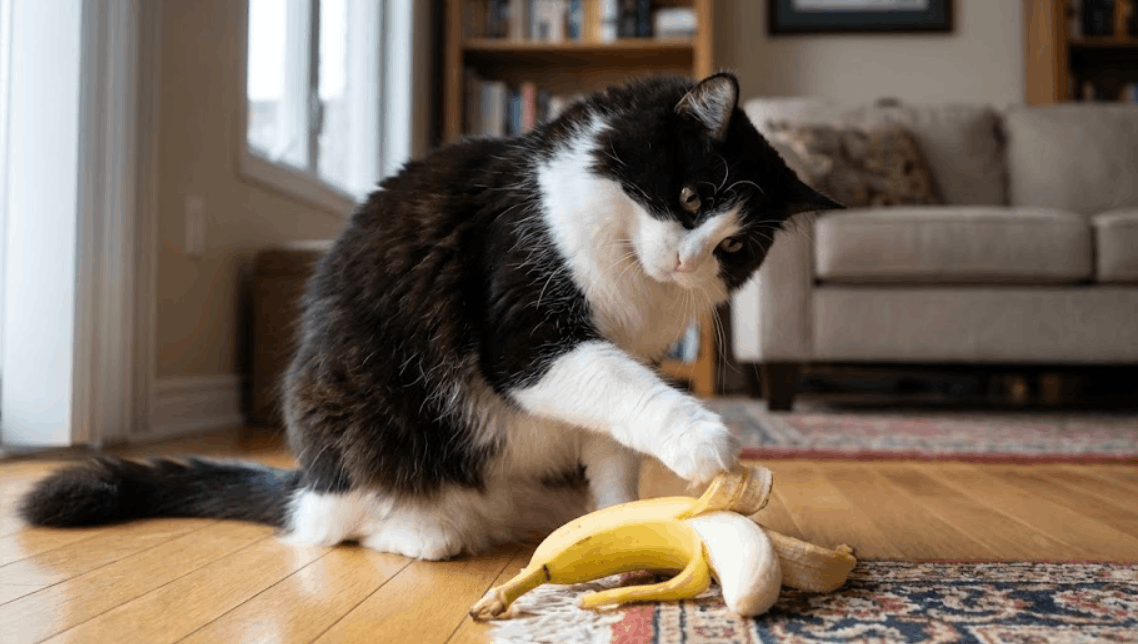

Table of contents

  1. Are bananas safe for cats?
  2. What to do if your cat ate bananas
  3. Symptoms to watch for (timeline)
  4. How much is too much?
  5. FAQ
  6. References

Are bananas safe for cats?

Bananas are generally safe for cats in the sense that they are not considered toxic. The ASPCA lists banana (Musa acuminata) as non-toxic to cats. (ASPCA Animal Poison Control Center, n.d.-a)

“Safe” does not mean “needed.” From a nutrition standpoint, cats are obligate carnivores with unique requirements (for example, taurine and arachidonic acid) that must be supplied by animal tissues, so a complete and balanced cat food should be the foundation of the diet. (MSD Veterinary Manual, 2024)

If you offer banana, think of it like any other treat. Veterinary guidance recommends that treats make up less than 10% of a cat’s daily calorie intake, because too many treats can unbalance the diet or contribute to unintended weight gain. (VCA Animal Hospitals, n.d.-b; WSAVA Global Nutrition Committee, 2024)

Bananas are a sweet fruit, and VCA notes that fruits tend to be higher in sugar than vegetables, so it is a good idea not to overdo sweet treats. If your cat has never had banana before, start with a very small amount and watch for tummy upset. (VCA Animal Hospitals, n.d.-a; VCA Animal Hospitals, n.d.-b)

Serve banana safely: wash it, peel it, and only offer the soft fruit. VCA recommends removing thick peels, skins, and rinds to help prevent choking or gastrointestinal blockage, and WSAVA also advises offering treats in an appropriate size and shape. (VCA Animal Hospitals, n.d.-a; WSAVA Global Nutrition Committee, 2024)

Cats with medical conditions should get individualized advice. VCA advises checking with your veterinary care team before feeding treats if your cat has a medical condition or is on a special diet, and maintaining a healthy weight is particularly important because obesity raises diabetes risk. (VCA Animal Hospitals, n.d.-b; Cornell University College of Veterinary Medicine, 2024)

What to do if your cat ate bananas

Symptoms to watch for (timeline)

How much is too much?

There is no “required” amount of banana for cats because it is not a necessary food. If you choose to share banana, keep the focus on your cat’s complete and balanced diet. (MSD Veterinary Manual, 2024; WSAVA Global Nutrition Committee, 2024)

Use a calorie-based rule instead of a piece-based rule. VCA and WSAVA both recommend that treats stay at 10% or less of a cat’s daily calories, with the majority of calories coming from balanced food. (VCA Animal Hospitals, n.d.-b; WSAVA Global Nutrition Committee, 2024)

WSAVA’s treat guide shows that many adult cats only have a daily treat budget of roughly 18 to 28 kcal (depending on body weight), so a few bites of any human food can use up that allowance quickly. If your cat has diabetes, is overweight, or is on a prescription diet, ask your vet for a safer treat plan. (WSAVA Global Nutrition Committee, 2024; Cornell University College of Veterinary Medicine, 2024; VCA Animal Hospitals, n.d.-b)

FAQ

References

  1. ASPCA Animal Poison Control Center. (n.d.-a). Banana (Musa acuminata). Toxic and Non-Toxic Plants. American Society for the Prevention of Cruelty to Animals. — https://www.aspca.org/pet-care/aspca-poison-control/toxic-and-non-toxic-plants/banana
  2. ASPCA Animal Poison Control Center. (n.d.-b). ASPCA Poison Control. American Society for the Prevention of Cruelty to Animals. — https://www.aspca.org/pet-care/aspca-poison-control
  3. VCA Animal Hospitals. (n.d.-a). Can you feed pets certain fruits and veggies. VCA Animal Hospitals. — https://vcahospitals.com/resources/preventive-dog/nutrition/can-you-feed-pets-certain-fruits-and-veggies
  4. VCA Animal Hospitals. (n.d.-b). Cat treats. VCA Animal Hospitals. — https://vcahospitals.com/know-your-pet/cat-treats
  5. VCA Animal Hospitals. (n.d.-c). Ingestion of foreign bodies in cats. VCA Animal Hospitals. — https://vcahospitals.com/know-your-pet/ingestion-of-foreign-bodies-in-cats
  6. World Small Animal Veterinary Association (WSAVA) Global Nutrition Committee. (2024). Feeding treats to your cat (v2) [PDF]. WSAVA. — https://wsava.org/wp-content/uploads/2024/06/Feeding-treats-to-your-cat-v2.pdf
  7. MSD Veterinary Manual. (2024). Overview of nutrition. Small animals. MSD Veterinary Manual. — https://www.msdvetmanual.com/management-and-nutrition/nutrition-small-animals/overview-of-nutrition-small-animals
  8. MSD Veterinary Manual. (2025). Gastrointestinal obstruction in small animals. MSD Veterinary Manual. — https://www.msdvetmanual.com/digestive-system/surgical-problems-of-the-gastrointestinal-tract-in-small-animals/gastrointestinal-obstruction-in-small-animals
  9. Cornell University College of Veterinary Medicine, Cornell Feline Health Center. (2024). Feline diabetes. Cornell University. — https://www.vet.cornell.edu/departments-centers-and-institutes/cornell-feline-health-center/health-information/feline-health-topics/feline-diabetes
  10. Pet Poison Helpline. (n.d.). Emergency instructions for pet poisoning. Pet Poison Helpline. — https://www.petpoisonhelpline.com/pet-owners/emergency/

Related articles

Illustration of a cat with exclamation points in the background

DISCLAIMER

The information provided on Can Pets Eat It is for educational and informational purposes only and is not a substitute for professional veterinary advice, diagnosis, or treatment. Always seek the guidance of your veterinarian or another qualified animal health professional before offering any food to your pet. Never disregard or delay seeking professional advice because of something you have read on this website. We make no guarantees about the accuracy or completeness of the content, and we are not responsible for any actions taken based on this information. Please be reasonable, use common sense, and seek professional guidance whenever you have concerns about your pet.