No. Xylitol is toxic to dogs and can cause life-threatening low blood sugar and, in some cases, acute liver failure. Treat any ingestion as an emergency.¹²

In dogs, xylitol can trigger rapid insulin release leading to severe hypoglycemia, and veterinary sources also describe acute liver injury in some cases.¹³

What to do if your dog ate xylitol?

  • Remove the product immediately and prevent your dog from eating more.

  • Save the packaging so you can share ingredients and the xylitol amount (if listed) with a veterinarian.

  • Call your veterinarian or a pet poison resource immediately, even if your dog looks normal.¹²⁵

  • Seek emergency care now if your dog is weak, wobbly, trembling, vomiting, collapsing, or having seizures.¹²

  • Do not attempt home treatment or induce vomiting unless a veterinary professional specifically instructs you to do so.

Danger Level: Extreme Danger 5/5
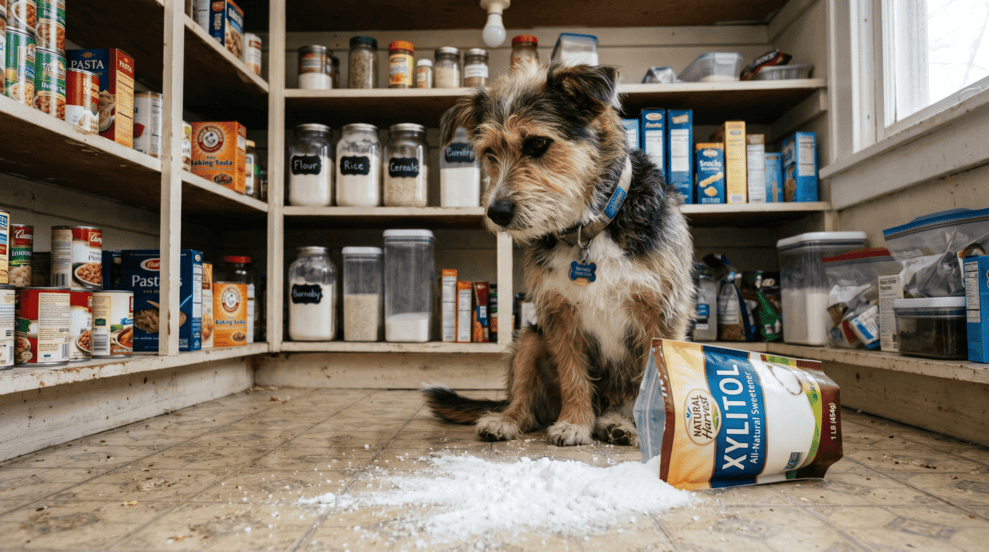
Dog looking at xylitol

Can dogs eat xylitol? | Is xylitol safe for dogs?

Can dogs eat xylitol? Is xylitol toxic to dogs?

No. Dogs should not eat xylitol. Xylitol is a sugar substitute found in many “sugar-free” human products, and it can cause life-threatening poisoning in dogs.¹² Xylitol can trigger a dangerous drop in blood sugar (hypoglycemia), and veterinary references also describe a risk of acute liver injury or failure in some dogs.¹³ Signs can start quickly, and severe cases can lead to seizures, collapse, or death.¹² If your dog may have eaten any xylitol-containing product (gum, candy, baked goods, peanut butter, toothpaste, supplements, or some medications), contact your veterinarian or a pet poison resource immediately. Do not wait for symptoms.¹²


Why xylitol is dangerous

Xylitol can cause rapid, severe hypoglycemia in dogs.¹² Veterinary references also report that some dogs develop acute liver injury or liver failure after xylitol exposure.¹³


Common xylitol sources

Xylitol is found in many sugar-free gums and candies, some baked goods, some peanut butters, and some oral-care products (like toothpaste).²⁴ Veterinary toxicology references also note that some sugar-free syrups or medication bases can contain xylitol.³


This is an emergency

Because signs can begin quickly and can become life-threatening, immediate veterinary guidance is essential.¹²

Table of contents

  1. Is xylitol safe for dogs?
  2. What to do if your dog ate xylitol
  3. Symptoms to watch for (timeline)
  4. How much is too much?
  5. FAQ
  6. References

Is xylitol safe for dogs?

Xylitol is extremely dangerous to dogs. Veterinary guidance explains that ingestion can cause a rapid drop in blood sugar (hypoglycemia), which can lead to weakness, collapse, seizures, and potentially death.¹²

Merck Veterinary Manual describes xylitol toxicosis in dogs and notes that xylitol ingestion can cause hypoglycemia and may also cause hepatic (liver) injury.³

VCA similarly states that xylitol can cause severe hypoglycemia and can also cause liver failure in dogs.¹

Xylitol is hidden in many products, especially sugar-free gum and candy, but also some baked goods, peanut butters, and oral-care products like toothpaste.²⁴

Because clinical signs can begin quickly and outcome can be severe, any ingestion should be treated as an emergency and discussed with a veterinarian immediately.¹²

What to do if your dog ate xylitol

Symptoms to watch for (timeline)

How much is too much?

There is no safe amount of xylitol for dogs. Even small ingestions can cause severe poisoning.¹²

Risk depends on the amount of xylitol in the product and your dog’s size, but owners cannot reliably calculate risk at home. The safest approach is to treat any ingestion as an emergency.¹²⁵

Because xylitol is present in many common products, the best prevention is storing these items securely and checking ingredient labels.²⁴

FAQ

References

  1. VCA Animal Hospitals. (n.d.). Xylitol toxicity in dogs. VCA Animal Hospitals. Retrieved February 7, 2026, from — https://vcahospitals.com/know-your-pet/xylitol-toxicity-in-dogs
  2. American Society for the Prevention of Cruelty to Animals. (2017, September 20). Xylitol: The sweetener that is not so sweet for pets. ASPCA. Retrieved February 7, 2026, from — https://www.aspca.org/news/xylitol-sweetener-not-so-sweet-pets
  3. Merck Veterinary Manual. (n.d.). Xylitol toxicosis in dogs. Merck & Co., Inc. Retrieved February 7, 2026, from — https://www.merckvetmanual.com/toxicology/food-hazards/xylitol-toxicosis-in-dogs
  4. Cornell Richard P. Riney Canine Health Center. (n.d.). Xylitol toxicities. Cornell University College of Veterinary Medicine. Retrieved February 7, 2026, from — https://www.vet.cornell.edu/departments-centers-and-institutes/riney-canine-health-center/canine-health-topics/xylitol-toxicities
  5. American Society for the Prevention of Cruelty to Animals. (n.d.). ASPCA Animal Poison Control. ASPCA. Retrieved February 7, 2026, from — https://www.aspca.org/pet-care/aspca-poison-control

Related articles

Illustration of a cat with exclamation points in the background

DISCLAIMER

The information provided on Can Pets Eat It is for educational and informational purposes only and is not a substitute for professional veterinary advice, diagnosis, or treatment. Always seek the guidance of your veterinarian or another qualified animal health professional before offering any food to your pet. Never disregard or delay seeking professional advice because of something you have read on this website. We make no guarantees about the accuracy or completeness of the content, and we are not responsible for any actions taken based on this information. Please be reasonable, use common sense, and seek professional guidance whenever you have concerns about your pet.