Yes. Cats can eat small amounts of plain strawberries, but strawberries should be an occasional treat only.¹²

Strawberries are non-toxic to cats, but cats do not need fruit. Keep portions small to avoid stomach upset and keep treats under about 10% of daily calories.¹³⁴

What to do if your cat ate strawberries?

  • Confirm what was eaten: plain strawberry is usually low risk, but strawberry desserts or sweetened products are not appropriate treats.

  • Remove access to the food and offer fresh water.

  • If your cat only ate a tiny amount of plain strawberry, monitor for vomiting, diarrhea, or reduced appetite.

  • Call your veterinarian if vomiting or diarrhea repeats or lasts more than about 24 hours, because dehydration can occur quickly.⁵

  • Keep future treats small and infrequent, aiming for less than 10% of daily calories.³⁴

Danger Level: Low Risk 1/5
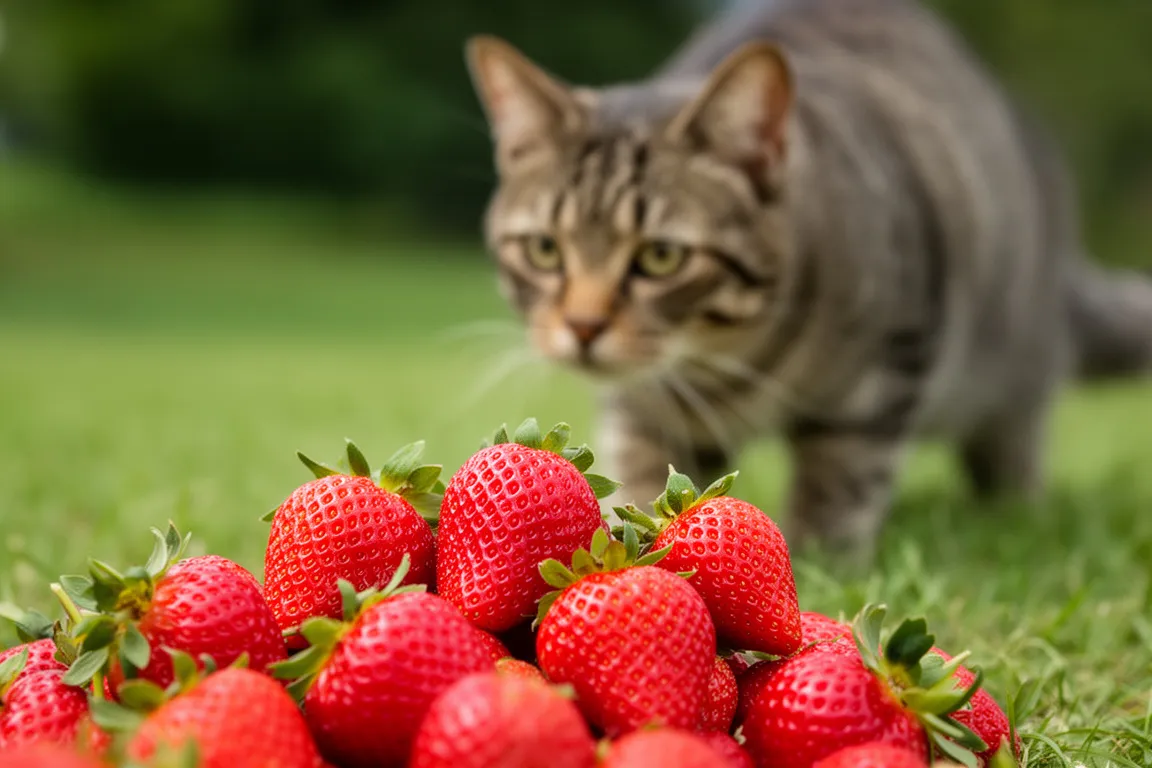
Cat looking at strawberries

Can cats eat strawberries? | Are strawberries safe for cats?

Can cats eat strawberries? Are strawberries safe for cats?

Yes. Strawberries are considered non-toxic to cats.¹ Some cats can safely have a small amount of plain strawberry as an occasional treat.² Still, cats are obligate carnivores, so fruit is not a nutritional need. Your cat should get nutrition primarily from a complete and balanced cat food, not from fruit.³ The most common downside is mild stomach upset if a cat eats too much or is not used to the food. If vomiting or diarrhea lasts more than about 24 hours, dehydration can happen quickly, so contact your veterinarian.⁵


Quick safety checklist

Offer only plain, washed strawberry flesh in small bite-sized pieces.² Remove stems and leaves, and avoid any strawberry desserts, syrups, or sweetened products.²


How much is okay?

Treats should stay small so they do not unbalance the diet or add too many calories. Expert guidance recommends keeping treats to less than 10% of a cat’s daily calorie intake, and another veterinary source advises not exceeding about 10% to 15%.³⁴


Common side effects

Too much strawberry can cause vomiting, diarrhea, or a temporary decrease in appetite in some cats. Persistent vomiting or diarrhea can lead to dehydration, especially after 24 hours.⁵

Table of contents

  1. Are strawberries safe for cats?
  2. What to do if your cat ate strawberries
  3. Symptoms to watch for (timeline)
  4. How much is too much?
  5. FAQ
  6. References

Are strawberries safe for cats?

Strawberries are considered non-toxic to cats.¹ They are also commonly listed among fruits that are okay to share with pets in small amounts.²

Even when a food is safe, it is not automatically helpful. Cats are obligate carnivores and should rely on nutrients from a complete and balanced cat diet. Fruit is optional and should not replace balanced food.³

The most common issue with strawberries is digestive upset, especially if a cat eats too much or is not used to new foods. If vomiting or diarrhea persists for more than about 24 hours, dehydration can happen quickly.⁵

Prepared strawberry foods are a separate issue. Strawberry ice cream, jam, syrup, baked goods, and candy are not appropriate cat treats. When sharing fruit, stick to plain fresh fruit only.²

What to do if your cat ate strawberries

Symptoms to watch for (timeline)

How much is too much?

For most healthy cats, start with a very small piece of strawberry. If your cat tolerates it, you can offer a few small pieces occasionally.²

Use a treat budget instead of guessing portions. Expert guidance recommends treats make up less than 10% of a cat’s daily calorie intake, and another veterinary source suggests not exceeding about 10% to 15%.³⁴

If your cat has diabetes, obesity, chronic digestive problems, or is on a veterinary-prescribed diet, ask your veterinarian before offering fruit treats.³

FAQ

References

  1. American Society for the Prevention of Cruelty to Animals. (n.d.). Strawberry. ASPCA Toxic and Non-Toxic Plants. Retrieved February 7, 2026, from — https://www.aspca.org/pet-care/aspca-poison-control/toxic-and-non-toxic-plants/strawberry
  2. American Society for the Prevention of Cruelty to Animals. (2021, January 28). Sharing is caring: Foods you can safely share with your pet. ASPCA. Retrieved February 7, 2026, from — https://www.aspca.org/news/sharing-caring-foods-you-can-safely-share-your-pet
  3. Cornell Feline Health Center. (n.d.). Feeding your cat. Cornell University College of Veterinary Medicine. Retrieved February 7, 2026, from — https://www.vet.cornell.edu/departments-centers-and-institutes/cornell-feline-health-center/health-information/feline-health-topics/feeding-your-cat
  4. World Small Animal Veterinary Association. (2024, June). Feeding treats to your cat (v2). WSAVA Global Nutrition Committee. Retrieved February 7, 2026, from — https://wsava.org/wp-content/uploads/2024/06/Feeding-treats-to-your-cat-v2.pdf
  5. VCA Animal Hospitals. (n.d.). Gastroenteritis in cats. VCA Animal Hospitals. Retrieved February 7, 2026, from — https://vcahospitals.com/know-your-pet/gastroenteritis-in-cats

Related articles

Illustration of a cat with exclamation points in the background

DISCLAIMER

The information provided on Can Pets Eat It is for educational and informational purposes only and is not a substitute for professional veterinary advice, diagnosis, or treatment. Always seek the guidance of your veterinarian or another qualified animal health professional before offering any food to your pet. Never disregard or delay seeking professional advice because of something you have read on this website. We make no guarantees about the accuracy or completeness of the content, and we are not responsible for any actions taken based on this information. Please be reasonable, use common sense, and seek professional guidance whenever you have concerns about your pet.