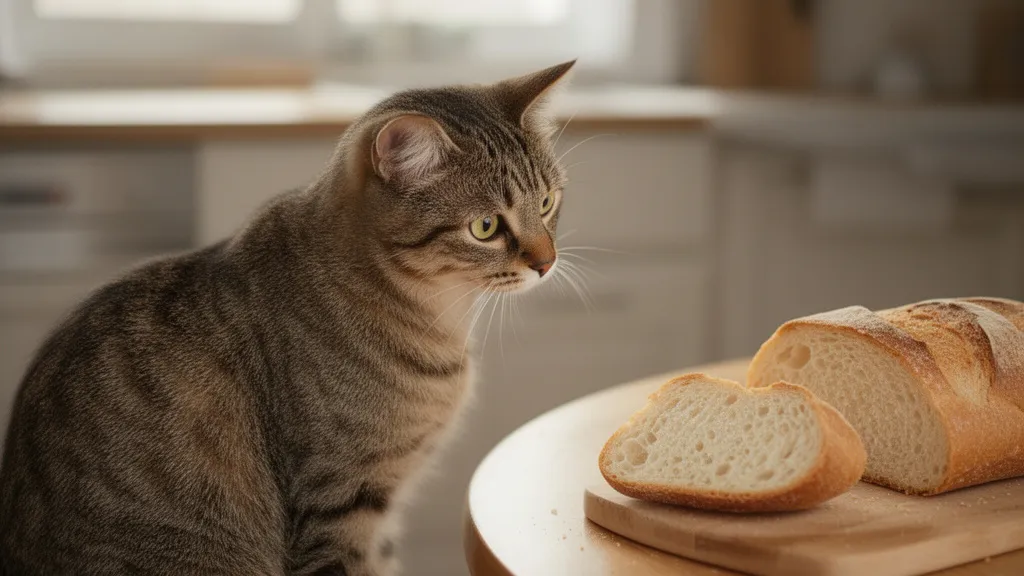
A small bite of fully baked plain bread is usually safe for cats as an occasional treat. Raw yeast dough, moldy bread, and breads with unsafe ingredients are not safe.
Plain baked bread is not typically toxic, but it is mostly extra calories and does not help meet a cat’s nutritional needs. Raw yeast dough can expand in the stomach and produce alcohol, which can be life-threatening, and moldy bread can contain tremorgenic mycotoxins that can cause neurologic signs. Some breads also contain ingredients that are unsafe for cats (especially onion, garlic, and chives).
What to do if your cat ate bread?
Figure out what kind of bread it was: plain baked bread is usually low risk, but raw dough, moldy bread, or bread with unsafe ingredients is an urgent concern.
Remove access to the bread and any packaging so you can check ingredients (especially onion, garlic, chives, and very salty or sweetened formulations).
If your cat ate raw dough, call a veterinarian immediately because the dough can expand and fermentation can produce alcohol.⁵⁶⁷
If your cat ate moldy bread, monitor closely for vomiting, tremors, wobbliness, or seizures and seek urgent veterinary care if any signs appear.⁸
If your cat only ate a small amount of plain baked bread, offer water, keep to the normal diet, and monitor for stomach upset.
Danger Level: Use Caution 2/5