No. Cats should not consume caffeine. Any suspected ingestion should be treated as urgent.¹²³

Caffeine is a methylxanthine that can cause dangerous stimulation, abnormal heart rhythm, tremors, seizures, and death in pets.¹²

What to do if your cat ate caffeine?

  • Remove the caffeine source right away (coffee, tea, soda, energy drinks, pills, supplements, chocolate products) and prevent further access.

  • Save the packaging so you can share the product name, caffeine amount, and ingredients with a veterinary professional.

  • Call your veterinarian immediately for guidance, especially for coffee grounds, beans, pills, energy drinks, or supplements.

  • Seek emergency care now if your cat is restless, trembling, vomiting repeatedly, breathing fast, has a racing heartbeat, collapses, or has seizures.¹²

  • Do not induce vomiting unless a veterinarian or pet poison professional instructs you to do so.

Danger Level: High Danger 4/5
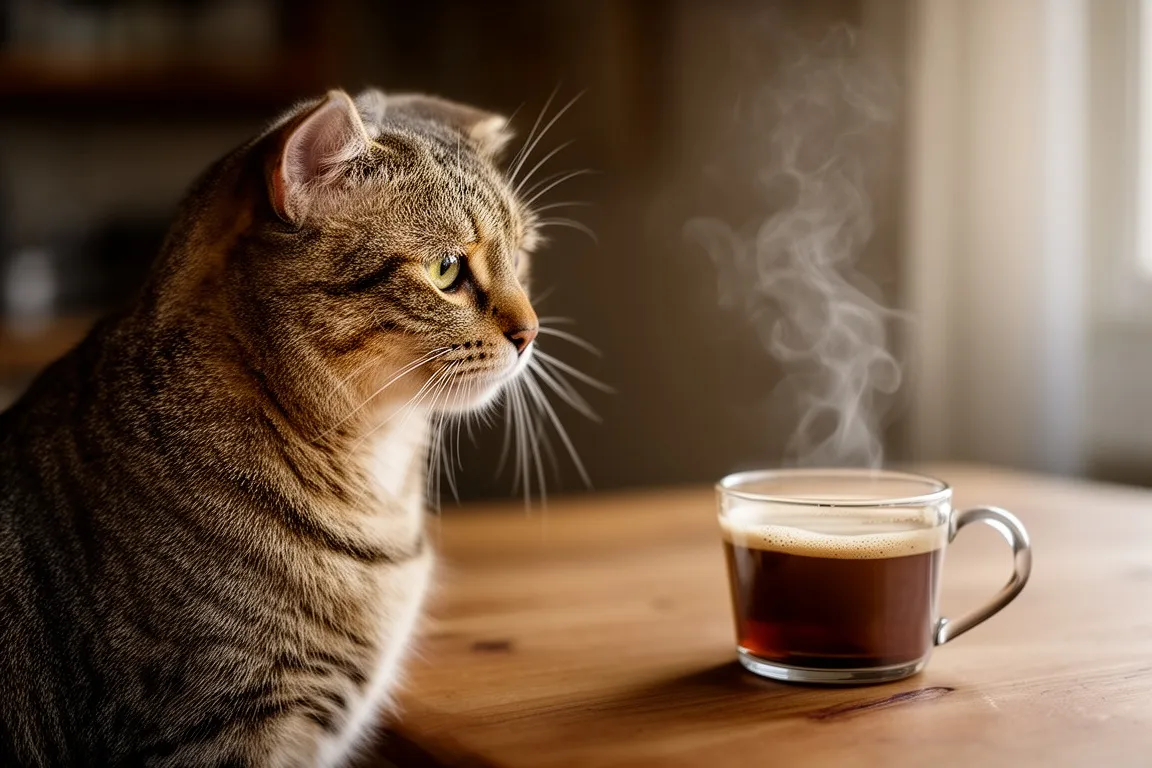
Cat looking at caffeine

Can cats eat caffeine? | Is caffeine safe for cats?

Can cats eat caffeine? Is caffeine toxic to cats?

No. Cats should not have caffeine in any form. Caffeine is a methylxanthine stimulant, and methylxanthines can cause serious poisoning in pets, including abnormal heart rhythm, tremors, seizures, and death.¹ Caffeine exposure is often accidental, such as licking coffee, chewing caffeine pills, getting into tea bags, or eating products that contain caffeine (including some supplements).²³ If your cat may have ingested caffeine (especially coffee grounds, caffeine pills, energy drinks, or supplements), contact your veterinarian or a pet poison resource immediately because signs can escalate quickly.²³


Why caffeine is dangerous for cats

Caffeine and other methylxanthines can overstimulate the nervous system and affect the heart. Veterinary sources describe signs such as vomiting, diarrhea, hyperactivity, abnormal heart rhythm, tremors, seizures, and even death.¹²


Most common caffeine sources in homes

Coffee (including grounds and beans), tea bags, energy drinks, sodas, caffeine pills, pre-workout or weight-loss supplements, and some chocolate products can all be sources of caffeine or related methylxanthines.¹²³


This is time-sensitive

Caffeine is absorbed relatively quickly, and veterinary references describe the need for prompt treatment and monitoring depending on exposure and symptoms.²³

Table of contents

  1. Is caffeine safe for cats?
  2. What to do if your cat ate caffeine
  3. Symptoms to watch for (timeline)
  4. How much is too much?
  5. FAQ
  6. References

Is caffeine safe for cats?

Cats should not be given caffeine. Caffeine is part of a group of compounds called methylxanthines, and veterinary toxicology guidance warns these compounds can cause vomiting and diarrhea, hyperactivity, abnormal heart rhythm, tremors, seizures, and even death in pets.¹

Caffeine exposure in cats is usually accidental. Common sources include coffee (especially grounds and beans), tea, energy drinks, soda, caffeine pills, and caffeinated supplements.¹²³

The risk depends on the product concentration and the amount ingested. Poison control resources emphasize that dogs and cats are more sensitive to caffeine than people, and concentrated sources like pills or coffee grounds are especially concerning.³

Because symptoms can progress from mild stomach upset to dangerous heart and neurologic problems, suspected caffeine ingestion should be treated as urgent and discussed with a veterinary professional right away.²³

What to do if your cat ate caffeine

Symptoms to watch for (timeline)

How much is too much?

There is no recommended or “safe” caffeine portion for cats. Because cats are more sensitive than people and risk depends on concentration and the cat’s size, the safest guidance is to avoid all caffeine exposure.¹³

Even small exposures can be concerning when the caffeine source is concentrated (for example, caffeine pills, coffee grounds, or supplements). Poison control resources list these as common, higher-risk exposures.³

If your cat has heart disease, is very young or very small, or is on medication, treat any possible caffeine ingestion as especially urgent and contact your veterinarian immediately.²³

FAQ

References

  1. American Society for the Prevention of Cruelty to Animals. (n.d.). People foods to avoid feeding your pets. ASPCA Animal Poison Control Center. Retrieved February 7, 2026, from — https://www.aspca.org/pet-care/aspca-poison-control/people-foods-avoid-feeding-your-pets
  2. VCA Animal Hospitals. (n.d.). Caffeine toxicity in pets. Retrieved February 7, 2026, from — https://vcahospitals.com/know-your-pet/caffeine-toxicity-in-pets
  3. American College of Veterinary Pharmacists. (2023, April 25). Caffeine. Pet Poison Control. Retrieved February 7, 2026, from — https://vetmeds.org/pet-poison-control-list/caffeine/
  4. Merck Veterinary Manual. (n.d.). Chocolate toxicosis in animals. Retrieved February 7, 2026, from — https://www.merckvetmanual.com/toxicology/food-hazards/chocolate-toxicosis-in-animals

Related articles

Illustration of a cat with exclamation points in the background

DISCLAIMER

The information provided on Can Pets Eat It is for educational and informational purposes only and is not a substitute for professional veterinary advice, diagnosis, or treatment. Always seek the guidance of your veterinarian or another qualified animal health professional before offering any food to your pet. Never disregard or delay seeking professional advice because of something you have read on this website. We make no guarantees about the accuracy or completeness of the content, and we are not responsible for any actions taken based on this information. Please be reasonable, use common sense, and seek professional guidance whenever you have concerns about your pet.